The Yeti, also known as the Abominable Snowman or Meh-Teh, is a supposed type of Big Foot that resides in the Himalayan mountains of Nepal. It is said that the Yeti was around long ago, part of the native Lepcha people’s religious mythos.
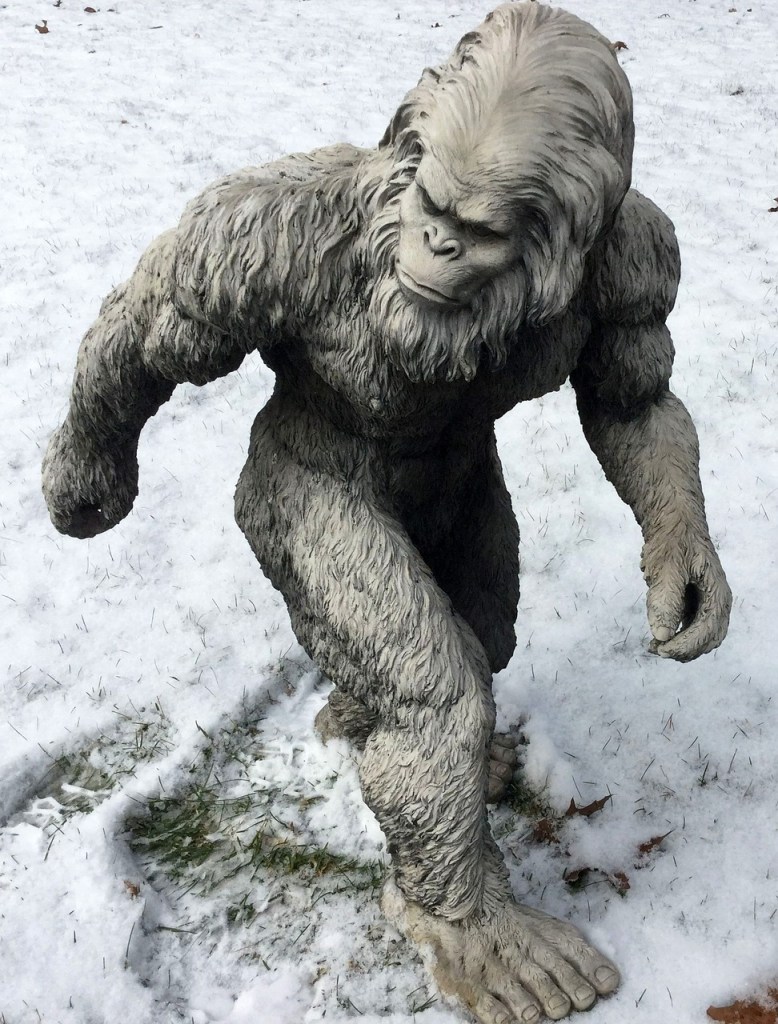
The Yeti is the snowy cousin of the North American Big Foot or the Chinese Yeren. Like other Big Foot-esque creatures, it is said to be taller than the average human and leave giant footprints in the snow.
Before the 19th century, when Englishmen began to explore the Himalayas and sight the creature, it is said that the Yeti was seen as a nature deity as part of the Mun religion. Mun is the pre-Buddhist religion of the Lepcha, an indigenous people of Eastern Nepal.
According to English Author H. Siiger, the Yeti was seen as God of the Hunt, often depicted as a wild ape-like man wielding a large stone and creating a whistling swoosh sound as it passes.
The first recorded sighting by westerners comes from B. H. Hodgson in 1832. In this account, local guides found what appeared to be a giant hairy man, who they ran away from in fear.
Hodgson declared that it was likely an orangutan, though this great ape only naturally lives in the rain forests of Sumatra and Borneo.

Interest for the Yeti peaked in the 1950s, when Eric Shipton took multiple photographs of strange tracks on a trek up Mt. Everest.
The latest expedition to claim to see evidence of a Yeti came from Indian army mountaineers in April 2019. They claimed to have spotted large and strange footprints near the Makalu base camp. They measured about 81 by 38 centimeters (32 by 15 in for American minds).
Possible explanations for the prints and other sightings include the chu-teh, a langur monkey at lower elevations, and the Tibetan blue bear or the Himalayan brown or red bear at higher altitudes. Regardless, the Yeti has found a home in the hearts of cryptozoologists everywhere.
Cover image from PixaBay, statue image from NeedPix, and footprint from WikiMedia Commons. All images on this site are free usage!
 Cryptopedia